“An inflated mark looks exactly like a healthy one, until the day you need the cash and the buyer disagrees.”
Private credit didn’t grow because it was safe. It grew because the banks stepped back from risk after the global financial crisis. That capital gap had to be filled and it arrived by the trillion.
For a while, the story worked. Yield was scarce, private credit promised more of it, and the money kept coming. But capital that arrives that fast rarely arrives with discipline.
The rush pulled in deals that wouldn’t have cleared a tighter market, pushed valuations past what the underlying loans deserved, and concentrated exposure in the corners you don’t tend to stress-test until you have to.
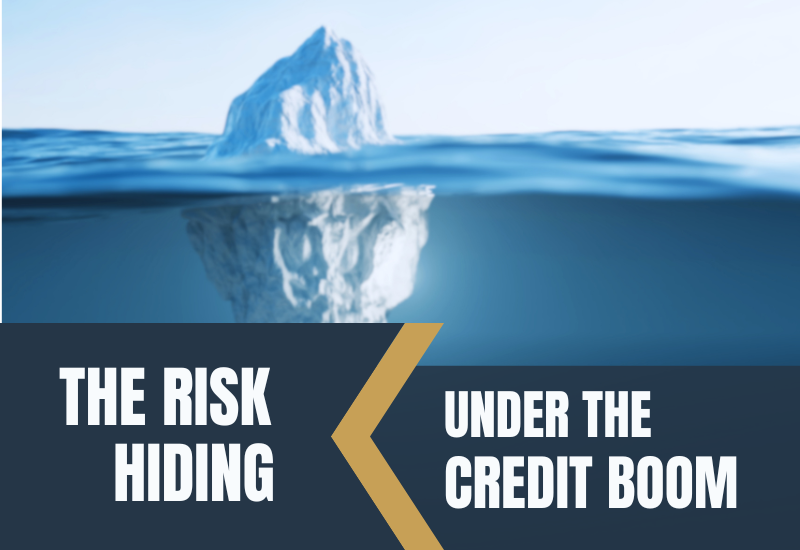
That’s where private credit risk actually lives — not in the headline yield, but in the gap between the mark and the money.
Here’s what makes private credit different from anything you can watch on a screen: these portfolios are marked, not traded. A mark is an opinion until the day you have to sell. In a market this opaque, an inflated mark can sit on the books for years looking like performance, right up until a refinancing fails or a borrower misses, and that gap becomes yours to explain.
Concentration sharpens the edge. When too much capital chases the same kind of paper, one sector wobble stops being a single borrower’s problem and becomes your portfolio’s problem. The opacity of private deals hides that buildup until it’s already sitting in your marks.
None of this means private credit is broken. It means it’s rationalizing, and rationalization is where the opportunity moves.
If you’re reading the turbulence instead of running from it, the secondary market is already pricing in fear.
Seasoned loans, paper with a payment history you can actually underwrite, can be bought below where a new origination would price. You’re not betting on a borrower’s future. You’re calling balls and strikes on a track record.
There’s a contrarian case worth sitting with, too. When uncertainty runs this loud, prices overshoot to the downside. Some of what’s being marked nervously right now may simply be cheap. Not all of it though, and the work is in telling the difference.
The signal isn’t “get out.” It’s sharper than that. Know exactly what you hold, know how it’s marked, and know where the secondary market is selling you fear dressed up as risk. The turbulence isn’t the threat to your book. Not knowing how to read it is.
If you want a map of the private credit risk worth watching and where the secondary market is handing it back as opportunity, this episode of the Debt Doctor podcast is a good place to start. Subscribe to Debt Doctor on Apple, Spotify, YouTube or your favorite podcast platform.
The Storm: Markets Meet Mother Nature is now officially released and available at Amazon and other major retailers: https://a.co/d/0gPB0yrY
This book and its concepts are drawn from decades of work across real estate, mortgage portfolios, distressed debt, and special assets to open the conversation of how converging forces are reshaping markets and offering the framework for investors and institutions to navigate what comes next.
Reviews say: “The Storm is not just a book, it’s a strategic lens into the future of our industry.”
Catch you in my next insights,
– Bill Bymel, Debt Doctor
As always, I’d love to hear your thoughts, feedback, or questions about this topic, episode, the market or the industry.
If someone in your network needs to read this, send it their way.
First Lien Capital specializes in distressed debt and mortgage workout strategies on residential and commercial real estate. First Lien Resolutions provides Special Assets expertise to banks and funds on portfolio risk, recovery strategies, and profitable arbitrage.
Schedule a consultation with Bill to REVIVE your portfolio today.
Stay connected with Bill Bymel: https://linktr.ee/billbymel