“Every so often a corner of real estate makes me stop and pay closer attention. This is one of them.”
I’ve spent my career around real estate debt and distress, but manufactured housing was never really on my radar. I probably know it the way many people in the business know it.
Then I actually learned recently a bit about the wealth it’s building that caught me off guard.
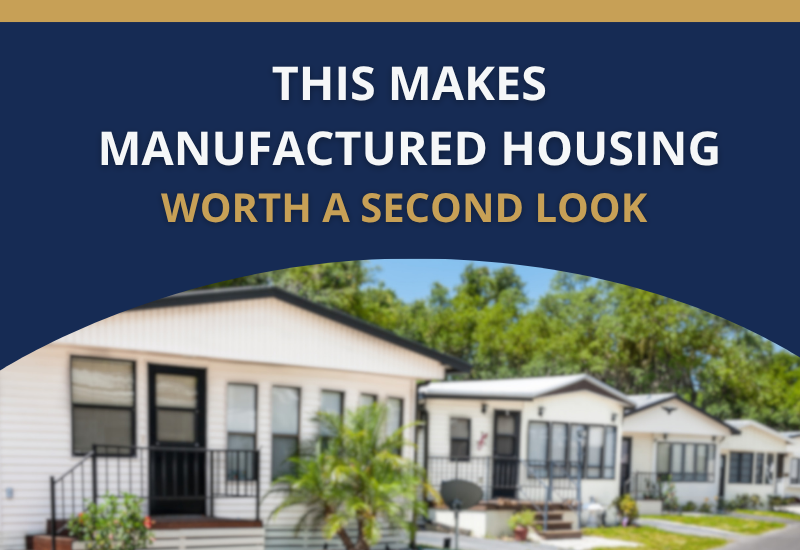
The first one is simple. The residents own their homes. Not in every case, but in some communities, people are buying the home and building real equity in it — the same way home ownership has always built wealth for families.
I’d half-assumed this was a rental story. It isn’t.
There’s pride of ownership in it, and there’s a path to building something, and that changed how I looked at the whole thing.
The second is the affordability piece, and how it sits next to the ownership piece without fighting it.
Usually when something is built to stay affordable, there’s a tradeoff hiding somewhere — for the resident, the operator, or both.
Here the model seems to let people get into a home they could actually afford and own it, while the community itself stays a working business.
I’m not going to pretend I’ve stress-tested that across every cycle. But the basic shape of it is more durable than I expected, and durability is something I pay attention to after the years I’ve spent cleaning up the opposite.
And the third thing is the quiet part. This asset doesn’t announce itself. There’s no version of it that turns heads in a room or makes for a dramatic story.
It just seems to keep working — filling homes, holding occupancy, doing the unremarkable thing well.
I’ve seen enough loud deals come apart to have a soft spot for the ones that don’t need to be loud.
I want to be honest about where I stand with it. I’m curious, not converted.
I’m not telling you manufactured housing is better than what you’re already doing, and I’m not in it myself.
I’m telling you it’s more interesting than I gave it credit for, and that the questions it raises — about ownership, affordability, and what actually holds up over time — are good questions for anyone who works in real estate to be sitting with.
What I don’t have is the depth. I’m looking at this from the outside, turning it over.
The person who actually lives in it, who chose it deliberately and has run these communities through real conditions, sees things I can’t from where I’m standing.
That’s Matt Ricciardella, and he goes deep on all of it with me — how these communities really work, what drew him to this asset, and what he’s watching now — in this episode of the Debt Doctor podcast. Subscribe to Debt Doctor on Apple, Spotify, YouTube or your favorite podcast platform.
The Storm: Markets Meet Mother Nature is now officially released and available at Amazon and other major retailers: https://a.co/d/0gPB0yrY
This book and its concepts are drawn from decades of work across real estate, mortgage portfolios, distressed debt, and special assets to open the conversation of how converging forces are reshaping markets and offering the framework for investors and institutions to navigate what comes next.
Reviews say: “The Storm is not just a book, it’s a strategic lens into the future of our industry.”
Catch you in my next insights,
– Bill Bymel, Debt Doctor
As always, I’d love to hear your thoughts, feedback, or questions about this topic, episode, the market or the industry.
If someone in your network needs to read this, send it their way.
First Lien Capital specializes in distressed debt and mortgage workout strategies on residential and commercial real estate. First Lien Resolutions provides Special Assets expertise to banks and funds on portfolio risk, recovery strategies, and profitable arbitrage.
Schedule a consultation with Bill to REVIVE your portfolio today.
Stay connected with Bill Bymel: https://linktr.ee/billbymel