“An extension isn’t a cure. It’s the same problem with a later date and a bigger number on it.”
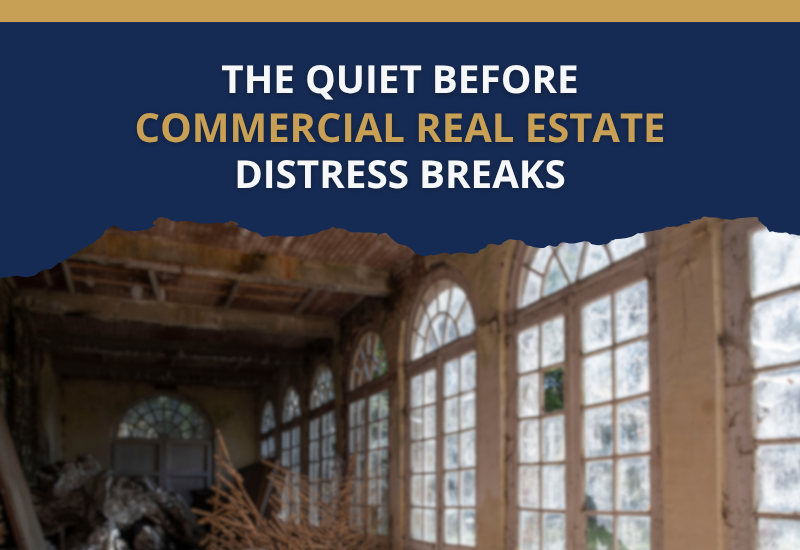
Two years ago, commercial real estate distress filled every forecast. The maturity wall got charted, warned about, priced into the worst case. And then the wave that was supposed to hit… didn’t.
The headlines cooled. The panic moved on.
If you think that quiet is a sign the danger passed, think again.
The distress hasn’t been cleared off the books. The maturity wall didn’t fall. The calendar moved, and the loans are still standing on the other side of it.
Paper underwritten in a 3% world is coming due in a world that looks nothing like it: higher rates, higher operating costs, lower values. The gap between what those loans assumed and what the assets can actually carry never closed. It got parked.
So why hasn’t it broken open?
Because the rules left room to wait. The way troubled assets get classified loosened up after COVID, and that gave lenders cover to extend and modify instead of downgrade and sell.
A credit that would have been marked down and moved a decade ago can sit on the balance sheet, technically current, quietly impaired. Watching inflation, geopolitical risk, and a fragile macro picture, regulators haven’t been eager to force the issue.
So the weak credits stay, looking healthier than they are.
There’s a second pressure building underneath it.
A lot of assets and businesses got distorted in the pandemic era. Some grew fast, some levered hard into cheap money, and now they carry debt loads that no longer match a normalized year. That mismatch doesn’t resolve itself. It waits for a reason to surface.
Naming that the distress is still out there is the easy part.
Knowing the single condition that turns a managed, quiet problem into one that moves all at once, and reading where the next wave actually forms and when, is a different thing entirely.
That comes from someone who built the process banks use to decide which loans get saved and which get sold, and who’s sitting close to these situations right now. It isn’t a read you pull off a chart.
The distress didn’t disappear. It got a deadline. And the quiet only lasts until something gives it a reason not to.
If you want the read the surface won’t give you, Jason Alpert and I gave it in depth in this episode of the Debt Doctor podcast. Subscribe to Debt Doctor on Apple, Spotify, YouTube or your favorite podcast platform.
The Storm: Markets Meet Mother Nature has received critical acclaim since release in April. It’s available at Amazon and other major retailers: https://a.co/d/0gPB0yrY
The Storm and its concepts are drawn from decades of work across real estate, mortgage portfolios, distressed debt, and special assets to open the conversation of how converging forces are reshaping markets and offering the framework for investors and institutions to navigate what comes next.
Reviews say: “The Storm is not just a book, it’s a strategic lens into the future of our industry.”
Catch you in my next insights,
– Bill Bymel, Debt Doctor
As always, I’d love to hear your thoughts, feedback, or questions about this topic, episode, the market or the industry.
If someone in your network needs to read this, send it their way.
First Lien Capital is a privately owned distressed mortgage investment platform focused on the acquisition and timely resolution of sub-performing, non-performing mortgage loans on residential or commercial real estate.
First Lien Resolutions, First Lien Capital’s third-party advisory and special servicing arm for banks, funds, and institutions holding distressed and dislocated debt, delivers end-to-end resolution through engineered outcomes that work for investors, servicers, and borrowers.
Whether you’re a bank, servicer, hedge fund, family office, or institutional investor, let’s talk about what our RESOLUTIONS can do for your book.
Stay connected with Bill Bymel: https://linktr.ee/billbymel